Love Sleep blog
Why Snoring Is More Dangerous Than You Think
Snoring gets treated as a joke or a nuisance. It’s actually the sound of an airway that’s partly blocked, and for many people it’s the first sign of something more serious.
What the sound actually is
When you fall asleep, the muscles in your throat relax and your tongue falls back. If the airway narrows enough, air rushing through it makes the soft tissue vibrate. That vibration is the snore. In other words, every snore is a moment when your airway isn’t fully open.
A spectrum, not a single problem
Breathing problems during sleep run along a range:
- Primary snoring: noise without pauses in breathing or drops in oxygen.
- Upper airway resistance syndrome: the airway narrows enough to disrupt sleep, even without full pauses.
- Obstructive sleep apnea: the airway closes completely, again and again, for ten seconds or more at a time.
The catch is that loudness doesn’t tell you where you are on that range. A quiet snorer can have significant sleep apnea, and a loud one may not. Only a sleep test can tell the difference.
Why it matters
Your heart and blood pressure
Each time the airway closes, oxygen drops and your body releases stress hormones that push your heart rate and blood pressure up. Night after night, that strain is linked to high blood pressure, heart rhythm problems such as atrial fibrillation, and heart failure.
Stroke
Untreated sleep apnea is associated with a higher risk of stroke, likely through those same swings in oxygen and blood pressure.
Your brain and mood
Broken sleep shows up during the day as trouble focusing, memory lapses, irritability and low mood. It’s also linked to drowsy-driving accidents.
Your metabolism
Sleep apnea is associated with insulin resistance and type 2 diabetes, and poor sleep makes weight harder to manage.
The person next to you
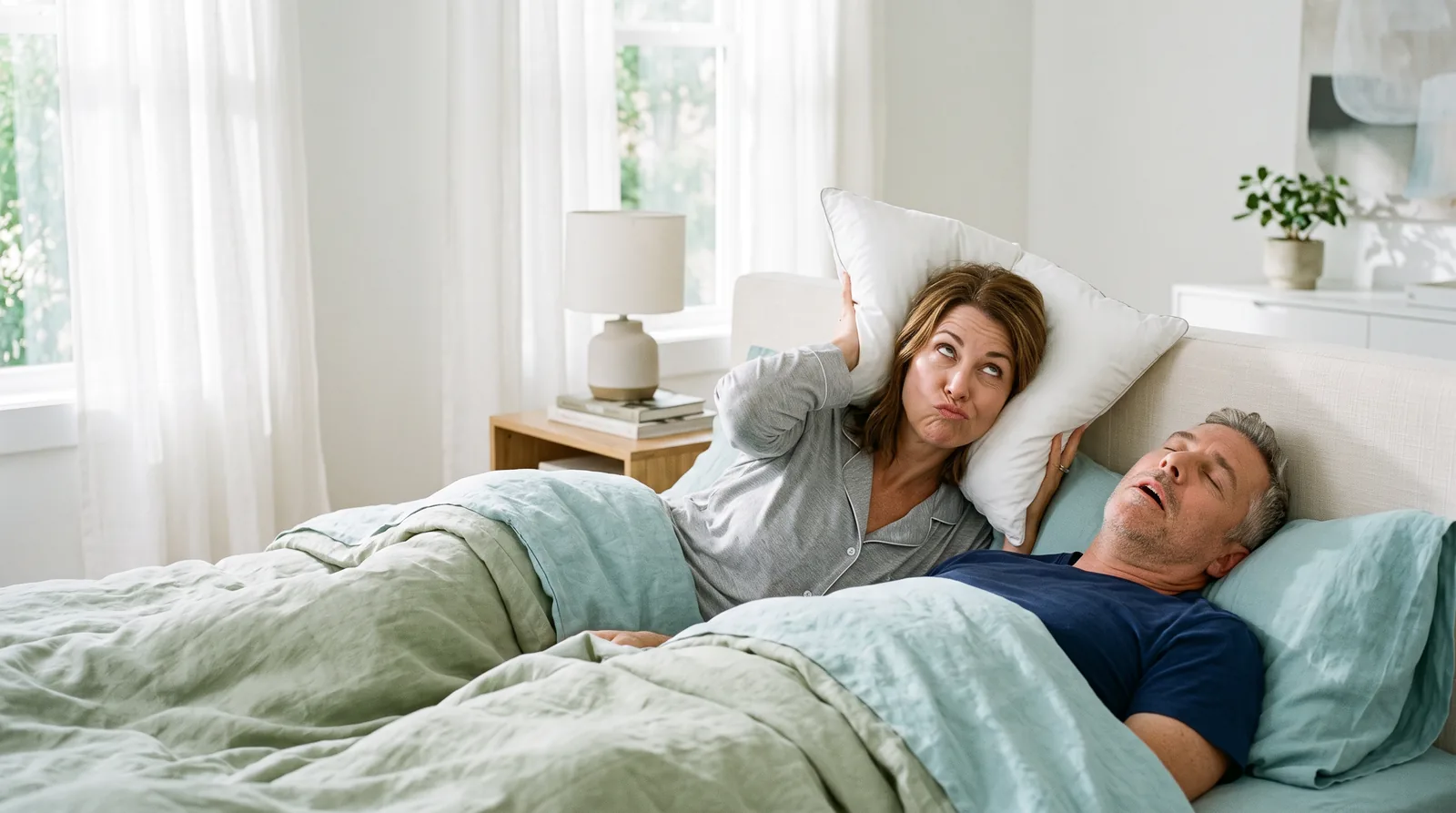
Partners of snorers lose sleep too. Many end up in the guest room, and the resentment that builds is real.
When snoring is a warning sign
Get evaluated if your snoring comes with any of these:
- Someone has seen you stop breathing, choke or gasp in your sleep
- You wake up tired no matter how long you sleep
- Morning headaches or a dry mouth when you wake
- High blood pressure, especially if it’s hard to control
- Getting up often at night to urinate
What to do about it
Start with the two-minute sleep quiz. If your score suggests risk, a home sleep test can diagnose sleep apnea in one night in your own bed. If you do have sleep apnea, or you simply snore, a custom oral appliance holds your jaw forward to keep the airway open. Side sleeping, limiting alcohol before bed and weight loss can help too.
Dr. Sheri Love treats snoring and sleep apnea at Love Sleep in east Wichita. Request a consultation or call 316-440-9700.
Keep reading
More from the blog
Ready to sleep through the night?
Call the office or request a consultation online. If you haven’t had a sleep study yet, we can order a home sleep test for you.